shabby blog

changes in latitudes header

changes in latitudes header
49ers 5k fundraiser adventures Aidan Ancel Keys Aunt Sandy Uncle Dave B.S. bad days bad storm baking basketball be happy beachin' it BEAT DOOK Becky bestest friends in the world BIG WIN blessed blogging boot camp Bryttava and Rob Campbell campbell clan cappuccino carbohydrates catnip plant challenge child change cheer christmas church close call Coach Harbaugh courage croissants Dad Devin Dexter Strickland DINKing it do something Doherty Earth Day Easter bunny eat good food encouragement EPIC FAIL evolution family family bakery family origins fat February FIND A CURE fishing Florida flowers football French cafe friends fun gamblin' gardening getting in shape ghrelin glucose GO PHIL God good book good cause good food good movie good science/bad science GOOFBALLS green beer green thumb grief growing up GW Haley happy birfday Happy Groundhog Day Happy Saint Patty's Day Harbaugh Bowl Harrison Barnes health health quest hibatchi highs and lows history lesson holidays House of Refuge hug a tree. endangered animals Hutchinson Island in Roy We Trust insulin Ireland Irish Royalty Jimmy Buffett Johnny Jonathan Judy Judy and Tom Kathy kayaking Kendall Marshall Kentucky ketones ketosis Kevin kid-at-heart laugh Leo the cat leptin Lois Lois and Steve love love my job love this weather LOVE VISITORS lucky me lucky to be alive macaroons man vs nature margaritaville Mediterranean diet memories Mexico Michael Jordan Michele Mikey mom morning glories my garden my girls Nancy Nathaly new home new year's eve new year's resolutions Nicky Nicole nourishment nutrition oh happy day painting Palm Beach paradise Paris in Town PBC Boot Camp pestering pirates prayer Ralph Lauren reading Reggie Bullock relief running sailing Scotland seedlings Seshie shopping Sigma Kappa Singer Island ski trip smart mouth snorkeling sore muscles ouch spring break Square Grouper starvation staying in touch Super Bowl taking it easy Tar Heels terror thank you the calorie trap the Emerald Isle the ocean the power of nature the Sunshine State there are good people in the world things that matter think about it Thirsty Turtle time flies tropical TURTLE SEASON turtle walk Turtlefest turtles Ty Lawson Tyler Zeller universal studios Uptown Art Uncorked vacation Varsha Varsha's African Adventure Vero Beach wedding planning weight Will wine winter WPB
Showing posts with label health. Show all posts

Thursday, March 13, 2014

The #1 Reason You Can't Lose Weight

Thank you to Jared Lopez and my friends at Palm Beach County Boot Camp for all the encouragement on my health journey... Dedicating my post tonight to you guys!


***

We all know that there's an obesity epidemic in our country. We are reminded of it on the news, at the doctor's office, and especially on those teeny tiny seats on airplanes! The fact remains 34% of Americans are obese and two-thirds are overweight.

People have proposed a lot of reasons why this is so, the main one being "Americans are gluttonous and lazy." Here's my response to that: When and why, exactly, did our culture become exponentially more lazy and gluttonous? Personally, I don't see it. The people that I know who are overweight are hardworking and intelligent people. They don't want to diet because everything they've tried either doesn't work or makes them feel awful. Many of them still try different diets and exercise regularly. Furthermore, many people who work physically demanding jobs (landscaper, farm worker, busboy, etc.) also suffer from obesity and the associated health issues.

This made me curious. For one thing, I was working out and eating what I thought was a healthy diet and I was not losing weight. In fact, there were times when I was gaining weight even when I didn't change a darn thing. Talk about frustrating! I realized how brave it was for someone 50+ lbs overweight to try and lose it. If I was exhausting myself with calorie restriction and exercise and hardly seeing results, imagine how discouraging it would be to someone with even more weight to lose. This is what inspired me to share my story, and, if it only helps one other person, I'll be overjoyed.

Here's what I have found in my research:

The real reason individuals struggle to lose weight has to do with insulin. Understanding insulin is essential to understanding weight loss.

Seventy percent (70%!) of people who are overweight are insulin resistant. Insulin resistance is when your body (pancreas, specifically) produces insulin in such high amounts that your body becomes resistance to its effects. Remember the post on insulin vs. leptin? Let's refresh: Insulin is a hormone that communicates with your body when you ingest carbohydrates. It tells your brain to stop burning energy and to start storing energy. Furthermore, it tells your liver, muscle, and fat cells to absorb the broken-down form of carbohydrates (glucose). Insulin's job is to clear the bloodstream of any of these simple sugars, replenish glycogen where you need it (muscles), and store the rest for a rainy day (i.e. a day with no food). When your body becomes insulin resistant, your body requires more insulin to do the same job as before. Clearing the bloodstream of sugar is your body's priority and it is flushing your body with insulin to achieve this goal.

This makes it difficult to lose weight because those high insulin levels are interfering with other hormones doing their work, such as leptin (the hormone that tells your brain that you are full). So, when you are insulin resistant, your body is storing, storing, storing the food you are putting in your body as fat. Meanwhile, you are still hungry even though you have plenty of energy stored away because your body is not able to start the metabolic process of burning fat.

For many people, insulin resistance leads to type II diabetes. This is when your insulin levels remain high, but your blood glucose levels also remain high. I.e., no matter how much insulin your body produces, it is not able to clear your bloodstream of all the sugar molecules. Insulin resistance is not only bad because it makes you gain weight, it also can lead to heart disease, stroke, cancer,  Alzheimer's, and many other serious illnesses.

A strong case of insulin resistance also causes metabolic syndrome. Metabolic syndrome is a biomarker doctors use to assess your risk of heart disease, stroke, diabetes, certain types of cancer, etc. You have metabolic syndrome if you are overweight (particularly around the waist), have high blood pressure, and elevated levels of cholesterol and triglycerides in the blood. (Note, high triglyceride levels are strongly correlated with diets high in carbohydrates. More on this later.)

Was I insulin resistant? I think I was to a lesser extent. Although I was not overweight (yet): I have a family history of diabetes; I was constantly hungry; and I had very low energy levels. This was compounded by the fact that I had a vitamin deficiency, which I found out about after my doctor ran a blood test. Specifically, I had a vitamin deficiency from following a low-fat diet. We all think we get all of our vitamins and micronutrients from fruits and veggies, but let me tell you what, I ate a LOT of veggies and fruits -- none of which contain vitamin B12. Vitamin B12 is only found in animal products: beef, chicken, fish, seafood (clams), eggs, milk, cheese, and other all-natural, high-fat dairy products. B12 is also 100% essential to the body. It helps make DNA and keep cells healthy. It is also essential to the proper functioning of the central nervous system. A few other symptoms I had related to B12 deficiency included poor memory, pale skin/easily bruising, difficulty sleeping, moodiness, irritability, and mild depression. I also frequently got lightheaded when I was exercising.

B12 deficiency is not as common as insulin resistance. However, I want to make the point that if you are having trouble losing weight, it is most likely insulin-related, BUT it could also be a myriad of other reasons. Take the time to figure it out and you'll be really happy you did. You not only will look and feel much better, but your long-term health will be much improved. Talk to your doctor and have them run a few extra tests at your annual check-up. Do some independent research on the foods you eat. Critically assess all of your other potential symptoms. For me, I had been living with the forgetfulness and moodiness for so long that I just thought it was part of who I was, I didn't think it was related to my diet at all. Then I realized: MOST THINGS ARE RELATED TO YOUR DIET. Seriously. It's that important. Invest a little more time in taking care of yourself because YOU ARE WORTH IT.

Sunday, February 9, 2014

A Healthy Distrust of Authority

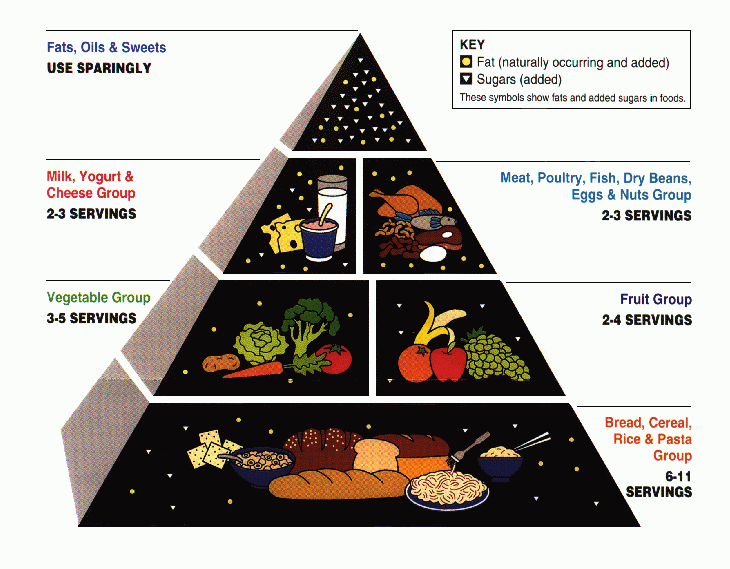
My mom used to call me her "challenge" child. I did not follow directions or commands without understanding and agreeing with what I was being told to do. My favorite question was "why?" I don't know why I have always been like this, but as I've matured I've learned to harness this instinct for more constructive purposes and drive my parents less crazy. (Although my dad, a perennial scientist/engineer, was far more amused by this quality than my mom.) Every morning for breakfast, my mom would let me choose between regular Cheerios with banana slices or Honey Nut Cheerios. My mom ate Cheerios every single morning with slices of bananas and either skim milk or soy milk (once that got trendy). For years, the back of the Cheerios box had the government-issued food pyramid that clearly instructed us to eat six to eleven servings of bread, cereal, rice, and pasta. Being very health conscious, my mom filled our house with all the recommended foods, and also extolled the dangers of any food high in fat or cholesterol. Well, I didn't challenge her on this then, but, sorry mom, I'm here to be your challenge child once again...

Who amongst us has never been under the assumption that eating fat makes us fat? In my 28-years of life, I haven't known a single person who didn't think this, or if they did, they never vocalized it near me. Sure some people ignore "fat is bad" and choose to "indulge," but I don't recall anyone telling me that fat is nutritious until the medical establishment came out with a tentative approval of "good fats" in the late 1990's. This fat demonization was something I never questioned. On the surface, it is a linear line of logic: you eat fat and then your body stores this same fat. The "good fat" approval in the 1990's was our first clue that there was something wrong with this conclusion. Today, let's look at a brief history of nutrition as it relates to medicine and politics. In future posts, I'll get into more detail on the science and evidence that underpins our current paradigm. 

First, let's rewind to a time when our society didn't actually agree that fat was bad for us, which surprisingly wasn't a medical consensus until the early 1980's (and then backtracked with the omega-3 asterisk in the late 1990's).

1797: Scottish surgeon, John Rollo, detailed his success in treating diabetes in British Army officers stationed in the fruit-rich Caribbean with an "all meat" diet.  

1863: An obese Brit, William Banting, published his "Letter on Corpulence Addressed to the Public," where he detailed a diet that helped him lose weight by giving up bread, milk, sugar, beer, and potatoes. His booklet was so popular in Britain that his name ("banting") became synonymous with dieting.

1889: Joseph von Mering and Oskar Minkowski observe that surgically removing the pancreas led to an increase in blood sugar, followed by a coma and eventual death.

1922: Two Canadian doctors, Frederick Banting and Charles Best, realize that homogenizing the pancreas and injecting the derived extract reversed diabetes mellitus. They win the 1923 Nobel Prize in Medicine for this discovery.

1925: French scholar, Jean Anthelme Brillat-Savarin, describes in "The Physiology of Taste" how fat prevents obesity by allowing for satiety. His book was so popular that it never went out of print and remains available today).

1952: President Eisenhower has a heart attack. The U.S. medical establishment is receiving many questions regarding the cause of heart disease and research on the topic becomes popular.

1953: Frederick Sanger sequences insulin. This is officially the "discovery" of insulin, since even though it had been isolated and used, we did not previously know it's chemical composition. Sanger receives a Nobel Prize in Chemistry for his work in 1958.

This brings us to the era where our modern nutritional guidelines were established.  Two prominent doctors, John Yudkin and Ancel Keys, have a rather public, ongoing academic spar on the cause of cardiovascular disease. Yudkin strongly condemns sugar ("pure, white, and deadly") as the culprit, while Keys believes the cause is "artery clogging" saturated fat and cholesterol. Both sides have a lot of compelling data and this debate plays out in the scientific community until politics gets involved.

In 1967, Senators Bobby Kennedy and Joseph Clark toured the South to check on the progress of the Economic Opportunity Act of 1964, the landmark legislation of Kennedy's "War on Poverty." The senators saw thousands of American children who were going hungry to the point of starvation. CBS News covers the trip in a special program called "Hunger in America." The public attention to the issue causes increased political interest in the issue, particularly during the presidential election. The Senate debates the issue and forms the U.S. Senate Select Committee on Nutrition and Human Needs chaired by Senator George McGovern and, rather quick by Washington standards, becomes functional in 1968. (Historical context: Bobby Kennedy was assassinated on June 5, 1968 and Richard Nixon is  elected president on November 5, 1968.)

In 1969, the committee works with the Nixon administration to organize the White House Conference on Food, Nutrition, and Health. The official recommendations from this bipartisan conference were to expand the food stamp program, improve child nutrition programs, improve other nutritional programs, and increase consumer protection information activities (e.g., nutrition labels). This is the impetus for the committee to create official nutrition recommendations.

For several years, the select committee held hearings in which it heard from academics, educators, nutritionists, doctors, and the public. What's most clear from the testimony, is that there is no consensus. The USDA even acknowledges on their official website that there was much controversy regarding the results. As I've alluded to before, the then-president of the National Academy of Sciences, Phil Handler, issued the following rebuke in his testimony: ''What right has the federal government to propose that the American people conduct a vast nutritional experiment, with themselves as subjects, on the strength of so very little evidence that it will do them any good?''

The motivations for the guidelines weren't malicious: they began with a society distressed at the societal failure of starving children in our own backyard. That being said, the guidelines were somewhat reckless. There was political pressure to produce something concrete from all these years of hearings, but all those hearings really produced was a lack of scientific consensus and no incontrovertible evidence for specific foods. Yet, the committee built a consensus for the guidelines by going with what seemed to have the most support.

The official U.S. nutritional guidelines were issued in 1977. Americans were instructed to increase their carbohydrate intake to 55 to 60 percent of calories and to limit dietary fat intake to no more than 30 percent of calories, particularly in regard to saturated fat. I'll get into further detail on the "evidence" behind this recommendation, but to summarize here, the reasoning for this looks similar to the "calorie is a calorie" logic.

"If a heart attack is caused by fat being trapped in arteries, we need to reduce the amount of fat we are ingesting so it doesn't build up in our arteries." Here again this reasoning disregards the fact that the human body metabolizes macronutrients in different ways for specific reasons. It's also a bit like blaming water for a clogged drain. "Pour less water down the drain and the pipe won't get clogged" doesn't sound logical to most people, yet this is exactly the same logic behind reducing fat intake. Is the plaque building up in our arteries a product of fat? Or is fat just getting stuck in something ELSE that is building up in our arteries?

There is other epidemiological evidence that has led to this consensus that fat causes heart disease; however, these studies conclusions are scientifically shaky. These same studies that are cited for why we should reduce fat intake, were strongly disagreed with when they were first published. I'll break a few of these key studies down in detail in a future post.

The point is, we didn't yet have the science to give nutritional recommendations based in hard facts. But a few powerful individuals decided IT SHOULD BE DONE ANYWAY. Since the late 1970s, the scientific community has developed a much better understanding of endocrinology (the study of hormones and the metabolism) and has much better evidence to establish revised nutritional recommendations. Unfortunately, these revised nutritional recommendations are contradictory to what is now conventional wisdom and it's difficult to reverse course 180 degrees. That's why this is something that may slowly build to become conventional wisdom, but for now will only reach the independent thinkers who seek it out.

I'll leave you with the following thought from Gary Taubes, keeping in mind the above timeline: "According to Katherine Flegal, an epidemiologist at the National Center for Health Statistics, the percentage of obese Americans stayed relatively constant through the 1960's and 1970's at 13 percent to 14 percent and then shot up by 8 percentage points in the 1980's. By the end of that decade, nearly one in four Americans was obese. That steep rise, which is consistent through all segments of American society and which continued unabated through the 1990's, is the singular feature of the epidemic. Any theory that tries to explain obesity in America has to account for that. Meanwhile, overweight children nearly tripled in number. And for the first time, physicians began diagnosing Type 2 diabetes in adolescents. Type 2 diabetes often accompanies obesity. It used to be called adult-onset diabetes and now, for the obvious reason, is not."

Sunday, January 26, 2014

A Tale of Two Hormones: Leptin vs. Insulin

 
Thank you to everyone for feedback on the leptin post. I am grateful to have readers! One of the main questions I got after the post was "so, what should I eat?" In answering this question, I gave what, at this point, has worked for me and can only be considered my opinion. What I want you guys to realize is that I'm not trying to impose my opinions and habits on you, but rather gather factual information that you can use to form your own opinions and habits. Some of this information resembles flashing red arrows pointing in a particular direction, but otherwise, I think it's important that my opinions be questioned. I don't want to be another person telling you what to eat. There are far too many of those people out there already. 

http://www.sherlock-holmes.com/Jerry%20Faces%2011_10_2005_nonames.jpgSince most of us don't have a particular zest for dissecting medical journals, let's make reading about nutrition a little more fun. When I was a kid, the Sherlock Holmes series were some of my favorite stories. Instead of feeling overwhelmed and lost in trying to decide what is good for us and what is bad for us (and, ostensibly, sounding a bit like Chicken Little), let's pretend we are Sherlock Holmes starring in the greatest caper of the century. Think about it: If proper nutrition can actually prevent the majority of chronic diseases and save millions of lives, perhaps even save YOUR life, this really is the greatest mystery you'll ever solve. Sherlock has a wonderful saying to guide our quest: "It is a capital mistake to theorize before one has data.  Insensibly one begins to twist facts to suit theories, instead of theories to suit facts."

Well, dear Watson, today let's learn about what blocks leptin because it does a whole host of other things of interest as well. Due to the rising rate of diabetes, many people are now familiar with insulin, but let's review the basics anyway. Insulin is a hormone produced by the pancreas when it is processing/digesting carbohydrates.

For the sake of this discussion, let's also define a carbohydrate. A carbohydrate is a molecular compound found in nature that is composed of carbon, hydrogen, and oxygen. Remember in chemistry class where we learned words based on the periodic table? The generic formula for a carb is Cn (H2O)n, which we could call "hydrates (H2O) of carbon (C)" or  "carbon hydrates."  The most fundamental type of carbohydrate is simple sugar, which comes in the form of glucose, galactose, and fructose (this group is called the "monosaccharides"). These simple sugars can combine to form more complex carbs such as sucrose, lactose, cellulose, and starch (these more complex groups are called "disacharides" and "polysaccharides"). Combining these carbs with other things (such as fiber in bread and fruit) changes the rate at which your body breaks down and absorbs sugar, but, keep in mind, your body is still processing sugar.

When you ingest carbohydrates, such as a bowl of pasta, your body uses enzymes to break down the carbohydrates into glucose which then enters the bloodstream. This is why folks with diabetes have to measure their "blood sugar." If you do not have diabetes or prediabetes, carbohydrates stimulate your pancreas, which then produces insulin at a rate consistent with the level of sugar in the bloodstream. Insulin is a hormone, just like leptin, that communicates with your brain. Insulin tells your brain to stop the use of fat as an energy source.  It also helps transport glucose out of the bloodstream and  into muscle, fat, and liver cells. Insulin tells these cells to store the glucose that's been circulating in your blood.

Unlike "starvation mode" when your body is not getting enough energy for its basic functions and is slowing your metabolism and slowly burning your fat stores, when you ingest a significant amount of carbohydrates your body goes into "storage mode."  Unlike leptin, which tells your brain that you are full, insulin tells your brain to keep eating while the body stores this treasure trove of carbs that you've just happened upon (score!). Remember, your body is looking out for you! Food has only recently been so plentiful, convenient, and inexpensive. Far before this occurred, your body developed a process to store energy, so that you don't starve when food is less plentiful (like in the winter). Insulin guides this process while leptin takes a nap. Until recently, our bodies have never been in continuous storage mode. In another post, I'll discuss the long-term effects of continuous storage mode.

Important side note to keep in mind for later: protein can also cause the pancreas to produce a bit of insulin. The stored form of glucose is called glycogen and it is required for rebuilding muscle tissue. Your body doesn't need carbohydrates to do this, however, as it can use protein, which is also a source of amino acids. However, too much protein will require your body to store glycogen elsewhere (such as fat cells). The amount of protein you need varies based on how much glycogen your muscles need.

Sources/further reading:
http://www.nhlbi.nih.gov/health/health-topics/topics/ms/
http://www.ncbi.nlm.nih.gov/pubmed/21713385
http://www.ncbi.nlm.nih.gov/pubmed/11566073
http://www.ncbi.nlm.nih.gov/pubmed/11596667
http://www.slideshare.net/ancestralhealth/ahs-slidesrobert-lustig
http://diabetes.niddk.nih.gov/dm/pubs/insulinresistance/#what


Wednesday, January 15, 2014

Leptin: The Golden Key to Appetite

One of the most interesting things I've read about when researching nutrition is the hormone leptin, so named from the Greek word leptos, meaning "thin." The reason why I find leptin interesting is because frequently when people think of going on a diet, they think they need to starve themselves (relatively speaking). "I just need to eat less and exercise more" is a common way to think about a new year's resolution to lose weight. The problem with this strategy is that you're hungry and the plan is unsustainable for a specific scientific reason: leptin. Control your leptin and you control your appetite. Once you control your appetite, it is MUCH easier to be selective about what food you choose to eat. So, today, let's learn about leptin because LEPTIN IS AWESOME.

https://blogger.googleusercontent.com/img/b/R29vZ2xl/AVvXsEgaDXFNo_mSluws9iKQzezbe1nGraV84IbAYDdHMD9rrn2WLWAcdSI5ZNN24ssoZ5C8ta9xPAm_GKSe9oyAEqjyFzUHaEC3ONgw0DqnQMw3s8E1x1KAJ5mbUp_7nAsoHkn4M951NqLz5iYQ/s1600/goldenKey.jpgLeptin is a protein that is made in your fat cells and is transported to your brain through your bloodstream. Leptin tells your hypothalamus (a specific area of the brain) that you have enough energy. Leptin is kind of like your food accountant, it tells the brain you've eaten enough food and stored enough energy to engage in activity. Just like a good accountant, leptin says, "Your cash/energy flow is positive and you've got enough to cover all your essential expenses, so feel free to go spend some money/energy on other things." Most important of all: You are not in starvation mode when leptin is talking to your hypothalamus.

What is starvation mode you ask? Let's say you're on one of those extreme "juice cleanse" diets. Leptin is not being sent to your brain and, as a result, your brain senses starvation and goes into survival mode. Your brain and body's primary goal right now is to get you fed. So the brain sends a signal to your vagus nerve (the longest cranial nerve in the body that stretches all the way to your abdomen) and that causes the feeling of hunger. Your brain also sends a signal to your thyroid that slows your metabolic rate. In starvation mode, your body is doing everything it can to extend the energy stores you have until you feed it again. So here you are, trying to drop a few pounds, and your body is working in overdrive to hold onto fat until you give it some food. Seems a bit inefficient, no?

Here's another way your body is working against you and your juice cleanse: Once leptin gets to the hypothalamus it sets off these "leptin-responsive" neurons in your brain. These neurons feed directly into the dopamine system, which controls the brain's reward and pleasure center. The lower your dopamine level, the more rewarding food becomes. The higher your dopamine level, the less rewarding food becomes. THIS IS NOT ABOUT WILLPOWER PEOPLE. You are biologically programmed to properly feed your body. So if you can't starve yourself to lose weight, what can you do? Eat the right foods. Eat the foods that keep your leptin and dopamine levels high. I promise to help us all figure out what those are. I just can't do it in the space of this post. The good news is that the ones I know about taste really, really good -- and are SO much better than endless glasses of brownish green juice!

Now, there's a wrench in this explanation that I'm sure you guys are bound to catch. Don't obese people have lots of leptin if it's generated by fat cells? Yes, an obese person does have high leptin levels, unfortunately, there is something blocking the leptin from getting to the hypothalamus. There are particular foods that make this happen. I'll get into this in more detail later as well. But here's something to get you thinking: Ever notice how certain foods never make you full? Like that time you sat down with a bag of potato chips and ate the whole thing? You were like, holy crap, where did that bag of potato chips just go?  Those potato chips were not generating any leptin, but they did give your body some carbohydrates which it is going to store until you give it what it really wants.

The key to controlling leptin is knowing which foods allow it to function normally and which foods block it from signaling your brain. It probably doesn't come as a surprise to you that many of the most well-known "bad" foods are not conducive to leptin functionality (e.g., chips, soda, cupcakes), but there are also a lot of other foods that might surprise you. What also may surprise you is the food that is conducive to leptin functionality: fat. Heart advocates, please indulge me, we have been very misled about fat. When you eat the right fat, it's not going to clog your arteries, but we'll get into the different types of fat and what your body does with them in another post.

The main thing to take away about leptin is that the right foods make you full (and happy!) and don't cause you to gain weight. Leptin does all your accounting for you (no calorie counting!) if you eat the right foods. Furthermore, if you are already full, eating a bag of potato chips is not appealing to you. If you eat the right food, you will feel satisfied and your leptin and dopamine levels will be high. If you eat the right food, you will be less hungry and more happy. Sounds like a win-win, right?

Dr. Lustig has a lot to say about leptin, you can read more about this amazing protein here, here, and here.

Monday, January 13, 2014

The Chasm Between Weight and Health

After reading my post yesterday, a friend of mine sent me a message about how she frequently felt judged for her small size (OMG, she must purge all her food, GAH, go eat a cheeseburger!) and found it comparable to how we judge people for being a larger size. She also kindly shared with me that she lost her dad to heart disease; even though he was very slender, he was certainly not healthy. I really appreciate her reaching out, and it made me realize that I needed to discuss this in further detail before moving forward with other posts.

My friend's story about her dad also reminded me of an article I read ages ago in Runner's World about an ultramarathoner who suffered a heart attack in his early 30s. Genetics? Perhaps. A diet extremely high in simple carbohydrates that he explained in great deal? In my humble opinion, this is the more likely culprit. I plan to do a post on the mounting evidence of sugar causing heart disease, but for now, I will simply state that is my opinion. Don't believe it until you read the evidence for yourself.

Too often we attribute weight to health when it's really just one of many factors and certainly, in my opinion, void of the most important factor: what do you actually eat. So I feel the need to set the record straight: size does not determine how healthy you are. I chose to start this discussion of health and nutrition based off of weight gain because I think it is something most people can relate to. My grander purpose is to get us thinking about health instead of weight. There are lots of overweight people who are not binge eaters, just like there are lots of skinny people who are not binge eaters. The morbidly obese and the emaciated actually have a lot more in common than meets the eye: their bodies are starved of the nutrients they actually need. You can be a medically defined "ideal weight" and be much less healthy than an overweight person. For example, you could have lung cancer, or any other number of diseases that have nothing to do with being overweight. This is how some parts of our medical lexicon play into nutritional misinformation. In fact, recent evidence shows a correlation between being overweight and having a longer lifespan. I would purport that, it's not the excess weight that's helping the overweight live longer, but one macronutrient in particular that is essential to the body (particularly the brain) that also helps absorb micronutrients. The overweight may be eating this macronutrient in addition to the food that causes them to be overweight. A slender person could also be eating this macronutrient without gaining any excess weight. (I will discuss this lovely macronutrient, my favorite of them all, in great detail, in another post.)

So please, pretty please with a cherry on top, stop judging other people based on their outward appearance/weight, and, more importantly, stop judging yourself based on your outward appearance and/or weight. The reason I wrote the "ultimate fat trap" post relatively early on in this discussion is because I want us to really see how little evidence our judgments are based on. And, furthermore, how little evidence our nutritional guidance is based on. It's enough to make anyone throw up their hands and say "screw it, I'll eat what I want."

Learn what foods are good for you and indulge in your favorites; may you find pleasure in food and find pleasure in health. Feed your body, feed your mind, and feed your soul with positive things. I hope my blog can help guide you a little bit in finding what things are actually good for you, as well as delicious and satisfying, and to stop the judging, depriving, binging, purging, or any other disadvantageous activity. I hope that we can do it together actually. I am learning and growing right beside you, and I think I can help us both ask the right questions. The hardest part of this equation is figuring out what foods are actually good for you, and I think we may actually be able to figure this out. Please, join me!

Sunday, January 12, 2014

The Ultimate Fat Trap

The conventional wisdom that millions of people follow and thousands of food companies and treadmill designers would like you to believe is "a calorie is a calorie." Let's discuss why this ubiquitous mantra simply doesn't work.

To begin, how do those nutritional labels on food get their caloric information? The U.S. has a uniformed system implemented that assigns each gram of the macronutrients contained within the food item (e.g., fat, carbohydrates, protein, alcohol, etc.) the average caloric value. This system, officially named the "Atwater system," uses 4 calories per gram for protein, 4 calories per gram for carbohydrates, and 9 calories per gram for fat. These averages were derived from a laboratory instrument called the "bomb calorimeter." The representative macronutrient was placed in a sealed container surrounded by water. Then, the food was completely burned and the resulting rise in water temperature was measured. Remember back to science class? A calorie is a measure of the amount of heat energy ("enthalpy of combustion") needed to raise the temperature of 1 kilogram of water 1 degree Celsius.

(Side note from Dr. Attia: "If you’re wondering why fats contain more heat energy than carbohydrates or proteins, it has to do with the number of high energy bonds they contain. Fats are primarily made up of carbon-hydrogen and carbon-carbon bonds, which have the most stored energy.  Carbs and proteins have these bonds also but “dilute” their heat energy with less energy-dense bonds involving oxygen and nitrogen." I also borrowed a handy chart from him, seen below.)

Now, before I put you guys to sleep, what we really need to ask here is how does the human body process caloric energy? Does the human body process energy the same way as a calorimeter? Without knowing any advanced science, I think it's safe to say that no, the body does not process energy the same way as a calorimeter. For the smartypants out there, here's a post that addresses the First Law of Thermodynamics. I think discussing thermodynamics is too much detail for our current purposes. It distracts from the issue at hand and we can arrive at a logical conclusion without it.

The main thing we normal folks need to understand is that the body uses different molecules for different functions. Energy isn't coming in with nothing happening between when you ingest food and when you exert energy. Your body isn't a giant pot of water, there's a lot more going on inside there than this mantra would lead you to believe. You can measure a calorie in just about any organic matter, including poison, spiders, toenail clippings, propane.... but the body reacts quite differently to different molecules. Our question should really be, how does the body react to the molecules we typically ingest and how does it use the macronutrients (e.g., fat, carbohydrates (SUGAR), protein, alcohol).


Table of calories 

On a non-scientific level, let's also think about this anecdotally. Whenever someone says, "a calorie is a calorie; you just have to burn more calories than you take in," I picture a young girl, about 13, who is overweight. She has a deep desire to be accepted by her peers and is in the midst of forming her adult identity. She thinks if she can finally slim down, people will see her for who she really is, because right now they only see her as the "big girl." She's resolved that this is the year she is going to lose weight. This girl skips breakfast and has a soda (~200 calories) and a yogurt with fruit (~200 calories) for lunch. At night she eats a salad with a low calorie/low fat dressing that her concerned parent prepares (700 calories). She might lose a little bit of weight, but soon she feels awful and can't suppress her hunger so she binge eats until she finally feels full. Her cycle of weight gain continues along with her cycle of depression over her lack of control. When her parents and her pediatrician tell her she needs to eat less calories, she grows resentful and further depressed. She feels like a victim, but is treated like the perpetrator. The reason why "a calorie is NOT a calorie" matters in her case is because losing weight and maintaining a healthy weight have a lot to do with what foods are making her eat more calories. Why does she not feel full? Why does she continue to eat when losing weight is really all she wants? Why is her urge to eat so strong that it overcomes all other desires? Why is her urge to eat more frequent than other people? Why is her body storing energy instead of expending energy??

Our society has got to stop this dogma. This isn't merely a political issue over healthcare or a pissing match between scientists, but an issue that disproportionately affects the innocent. When we say losing weight is a matter of willpower over what we eat and what we expend, we are telling this innocent child, and the millions like her (including obese babies), that her willpower is not strong enough to "put down the fork." It creates a destructive pattern of thinking and does nothing to actually help. This is a major reason why instances of bulimia and anorexia are rising in the obese community. It is also one of many reasons the overweight and obese are disproportionately depressed, which, I am beginning to believe is more linked to the type of food they are eating than how they are treated, although that certainly isn't helping matters.

Yes, those who eat tons of calories tend to be those who are larger, but not always. What is so much more important is WHY, why are these people eating more calories. I'll discuss this in my next post on leptin, but feel free to read up on your own. :)

Monday, January 6, 2014

Why me?


Martin Luther King, Jr. once said, "Our lives begin to end the day we become silent about things that matter." I try to remember this when I write about nutrition. The fact is, I'm not a doctor or a nutritionist and who the heck cares to listen to one more person telling them what to do? There are so many fad diets, exercises, and pills that promise to make you lose weight or be healthy (and, no, those two things aren't synonymous). Why should I add to this confusing noise when I'm not an expert?


The answers I keep coming back to are: Because a lot of the "noise" is just trying to make a buck. And maybe it takes a normal person with no ulterior motive to guide normal people who are confused by the science. Because none of us are experts and we're floating in all this information and we don't know who to believe. And a lot of the "experts" feel pressure to have a theory (and be published) and use some really dubious science and logic to "back it up." And a lot of the other experts who have done great research with mind-blowingly logical conclusions get ignored by the institutions that could do something with the information. For example, if a hospital were to run a clinical trial on nutrition, where would it get the funding?  How are most clinical trials funded? You guessed it, by pharmaceutical companies. And good for them! Sometimes they really help people! The thing is: some diseases need pills, just not all. The other thing about hospitals and research universities attached to hospitals is that they aren't in the business of healthy people. What they need are prescription medications, treatment centers, and surgery wards. They do try to prevent people from coming back, but they simply aren't in the business of preventing people from going there in the first place. So why do research on nutrition? Why allocate the funding? It's simply not rational. It would be like a hospital sponsoring research on wearing helmets on motorcycles, with a sliver of hope that they might get less head trauma cases in the ER.

I used to think every doctor had all the answers. Every single person who went through medical school was some kind of genius and joined the club of geniuses who had all the answers. They all spent so much time and money studying enormous textbooks and being mentored by other doctors that they must have gotten all the answers. I thought, "doctors, well, they are just way smarter than me." And a lot of them still are WAY smarter than me. I'm really, really thankful for all of them. They are amazing people who do an incredibly important job.

Without taking away from any of what I just said, here's the thing that's important to know about doctors: When they were in medical school they took notes on lectures and read books that had the facts, and then they were tested on those lectures and books. Same thing in residency, they were shown how to operate or perform a procedure or how to diagnosis a patient based on those same books they just finished studying. At no point did anyone at any med school, anywhere say to these students, "By the way, the facts might be wrong, so you should really check all those footnotes and sources in your books and see how they came up with this information." That's not to say that doctors don't stay up on new research, but new research isn't the same as revisiting old research. And revisiting old research is not all that common, especially when it comes to nutrition (such as research on cholesterol and red meat). So often this old research relies on association instead of causation.
 
“For the greatest enemy of truth is very often not the lie — deliberate, contrived and dishonest — but the myth — persistent, persuasive, and unrealistic. Too often we hold fast to the clichés of our forebears. We subject all facts to a prefabricated set of interpretations. We enjoy the comfort of opinion without the discomfort of thought.”
- John F. Kennedy, Yale University commencement address (June 11, 1962)

Sunday, January 5, 2014

Why I care

I never wanted to be a doctor or really anything even related to the medical field. I never quite got comfortable with hospitals, even though I probably should be more comfortable with hospitals since my mom worked at one for decades. Even though I rationally understand they do so much good and happy things happen there, hospitals have always struck me as kind of sad and eerie. The truth is, I'm not into what doctors actually do and always knew it on some basic level. I also don't like the sight of blood. Or other bodily fluids. Clearly, the medical profession wasn't my calling. So why do I care so much about health?

I do like to analyze things, learn details, and step back on the big picture, which makes sense with my current interests in finance, economics, and writing. However, I think my interest in health definitely starts with my mom. She was a nurse practitioner at Duke University Medical Center and spent most of her career in vascular radiology. For those who don't know what that is, the simplest explanation is that it generally involves procedures on organs, arteries, and vessels that are less invasive than surgery. A typical patient might have a blocked artery, have a stent inserted to open the artery so that blood can now be pumped through therein reducing the risk of a heart attack. Many of my mom's patients had clogged arteries as a consequence of an unhealthy lifestyle. My mom was privately frustrated with patients that wanted pills to cure their ailments. It was clear to her that changing their lifestyles would give them a happier, longer life. But most never made that change. She also never understood the lung cancer patients who would roll their wheel chairs outside to smoke cigarettes. Again, a lifestyle change is a lot more difficult than swallowing a pill. And, boy, let me me tell you what, she practiced what she preached. I was the only kid at my school in 1991 with an all-natural peanut butter sandwich on whole wheat bread. When I wanted dessert, she would hand me an orange. Soda was banned from the household except for the occasional special pizza night. And even then, she didn't drink it.

There are other reasons I care about my health. Playing sports made me competitive and strive to be my best. When I competed, I felt the effects of everything that entered my body. When you are competing for hours on a daily basis, the effects of bad food are felt much sooner than the time it takes to gain a few pounds. I also strongly believe in personal responsibility for things that are important to you. Living a long time is important to me. Life is too short as it is. When my mom passed away, it made me realize how valuable a day was, a week, a year. If eating something different gives me another year with my loved ones, it's not such a difficult choice to eat something healthy.

That being said, I don't think constant deprivation is the answer. Many people think this way. "You're overweight? Put down the fork, dummy." I disagree. For one thing, it slows your metabolism to eat less (even if you eat the "right" foods) and when you do finally eat your body will want to store any excess energy because it's not sure when you're going to feed it again. The amazing thing about the human body is how adaptable it is: It finds ways to make sure you get fed in the long term. It prioritizes your vital organs over your extremities. It slows your metabolism when you are expending a lot of energy to make sure you don't burn through your stores too quickly. It can switch between burning carbohydrates and burning fat depending on what you are feeding it. It can safely drain toxins out of what you ingest through your liver. Amazing. I mean seriously, body of mine, thanks for looking out, I know I make some poor decisions sometimes.

I think it's really important to say this before I get into this next bit of why I care about health. I do not think a lot of overweight people chose to be overweight. I think there are far more complicated issues surrounding a healthy weight than "putting down the fork." Some of it is systemic issues with our food system and some of it is wrongheaded information. But I think it's putting the cart before the horse to explain these reasons right now, so please trust me when I say, I am not blaming anyone, we are all in this together.

The societal consequences of poor nutrition are upon us and are only getting worse (facts are courtesy of Dr. Attia, Dr. Robert Lustig, and the CDC):
  • 34% of Americans are obese and two-thirds are overweight.  This represents more than a 200% increase from 1970.
  • A recent study in Obesity estimates that by 2030, 50% of Americans will be obese and 79% will be overweight.
  • Since 1980, overweight rates have doubled among children and tripled among adolescents – increasing the number of years they are exposed to the health risks of obesity. 
  • Pediatric endocrinologists (such as Dr. Lustig) are now seeing obese six-month olds. ("Hey kid! Go run on a treadmill or something!" clearly isn't the solution here.)
  • Over 8% of Americans are diabetic, and if you include those undiagnosed, an additional 26% of Americans are pre-diabetic.  This represents more than a 400% increase from 1970.
  • Every 7 seconds someone in the world dies from a diabetic complication (this is not a typo).
  • Diabetes is also the leading cause of stroke, blindness, kidney failure requiring transplantation, all amputations combined, and many other medical problems.
  • According to McKinsey & Company, reducing the U.S. obesity rate to 15% (that of 1970) would save approximately $150 billion per year in Medicare spending alone, and close to $500 billion per year in overall U.S. healthcare spending. The U.S. spends over $2.7 trillion per year on healthcare – nearly 19% of our GDP, and more than any other country.  Even if no other aspect of our spending increases in the next 20 years, the cost of healthcare alone will bankrupt us as a country. Think about the opportunity cost of this spending, think about what changes might happen in our society if this amount of money was invested in public education.
Those are some really sobering numbers. Please take a minute to let those sink in.

I think people deserve some answers about how we got here. I think my friends, my neighbors, my family, and myself need some better information and some better food. Unfortunately, we're all busy people with pressing short-term priorities and one person can't possibly solve this. That's why it really just starts with each one of us as individuals, caring a little bit about our health and trying to prevent ourselves from becoming a statistic. I'm not going to tell anyone else what they should do, but, as for myself, I think small, manageable choices done on an individual level can help the macro environment. All for now, gotta go do some laundry. 

Thursday, January 2, 2014

Reflections and Resolutions

2012 and 2013 were amazing years for me: I moved to Florida from DC, started a new career, got married, toured Europe, witnessed about a dozen friends get married or have kids, bought a house, renovated said house, and hosted the holidays in the new home for the first time. These years kept me so busy that I have had little time to pause and reflect, and even less time to write. In 2014, I'm resolving to take more time to write and pursue hobbies that nourish me. Taking care of myself translates to a happier, more deliberate citizen of this grand world and allows me the energy to give more freely of myself to others (another resolution).
Losing weight is a common new year's resolution, perhaps even a cliche new year's resolution, but it certainly was my resolution in 2012 (before the wedding). I read about preventative health and nutrition a lot, so I realize that people have strong views on nutrition, much akin to politics. With that in mind, know that I'm sharing this story for those of you who are somewhat open minded. Perhaps you are struggling with your weight or your health. You may be committing to a new routine that turns out not to work (like so many plans out there). Maybe my story will help you think about things differently. Maybe it will free you from counting calories in and calories out. (I really find that exhaustive no matter how cool the gadget is.) Maybe you will stop feeling so guilty for having the basic physical impulse called hunger. Maybe you will not feel so inadequate when the scale doesn't budge.  

http://thetrendguys.com/wp-content/uploads/2012/12/New-Years-Gym-Resolution.jpgA lot of the research I read on nutrition is written by doctors who take the necessary dispassionate, methodical approach to their work. How this information translates to a normal human being is rarely accurately reported on in the modern media, which is driven by ratings and website hits. I've realized how even people with the best of intentions cause a damaging web of misinformation. Millions of people are critically ill after following the conventional wisdom. Millions more have low self-esteem from measuring their self worth and will power with the "calories in, calories out" mantra. It's one thing to say that premise is false, it's another thing to understand just how liberating the truth can be to the millions of people who care about their health and have the wrong information. 

Mainly what I understand is that our journey to good health is frequently a road with no signs and no map. Or worse, the wrong signs and a backwards map.  Or someone else's map and in a foreign language! For any one study on nutrition, you can read something else that completely contradicts it. So whose map do you follow? Keeping an open, yet critical mind, I found it best to draw my own.

In 2013, I had a sort of nutritional revelation. I had a blood test earlier in the year that showed I was deficient in vitamin B12. It was affecting everything: my memory, my energy, my mood, my sleep, my metabolism, and, of course, my health. I had no idea it could do all these things. None of my previous doctors had ever bothered to test me for this deficiency before. There are a million reasons why a person can't sleep or is moody and I appeared healthy and led a healthy lifestyle. At least, I thought I ate healthy (low-fat proteins and whole grains with lots of veggies and fruit). I was eating normal portions and exercising regularly. I didn't think my diet could possibly be to blame until my blood test came back and I started learning about B vitamins and how many nutrients in all the foods I was eating are fat soluble. FAT SOLUBLE. Strange because I thought fat was bad for you. In addition, B12, which is essential to the central nervous system, is only found in animal fat. HOLY BACON BATMAN. I thought vegetarians were the healthiest people on the planet and vegans were basically masters of self control with impeccable health. Yet, here is this essential nutrient whose absence was turning me into a zombie, that is ONLY found in animal fat. Yet, still, I needed a lot of convincing that animal products, particularly fatty animal products were good for me. So I started reading more critically and my world was turned upside down. 

A lot of what I found is controversial and some of it even lacks solid proof, so I hesitate to get into it in-depth right now, but I'll share a few of my favorite resources that got me to stop freely accepting conventional wisdom without critical thought. The point is, all of these authors could still be wrong about certain things, but they are at least thinking critically about the facts. As Aristotle said, "It is the mark of an educated mind to be able to entertain a thought without accepting it." My modern translation = draw your own nutritional map. Read people who contradict your worldview on nutrition, so that you get a better understanding of the facts. If you are in decent health, experiment with food and observe how different food groups affect you. Most of all, remember that YOU are the largest shareholder in your long-term health, YOU have the most at stake, and YOU care far more than the media, the government, agra-business, and certainly more than the pharmaceutical industry. No one else but you will care for your health, so think long and hard before you give up on it. To quote Mary Oliver, "Tell me, what is it you plan to do with your one wild and precious life?" I don't think it's dying young or suffering from chronic illness... (that last bit was me.)

Dr. Peter Attia

Dr. Robert Lustig

Gary Taubes
My favorite quote on this topic appears in his NYT article, What If It's All Been a Big Fat Lie?: 
Phil Handler, then-president of the National Academy of Sciences, testified in Congress in 1980: ''What right,'' Handler asked, ''has the federal government to propose that the American people conduct a vast nutritional experiment, with themselves as subjects, on the strength of so very little evidence that it will do them any good?'' [Regarding legislation pertaining to the food pyramid]

Dr. Mary Enig

Dr. Thomas Seyfried
(Not as off topic as you would think, but I will save my thoughts on this for another post.)

Without going through all the gritty details, what I will say is what has helped me the most in my search for long-term health is thinking about the quality of food versus simply measuring calories consumed and calories burned. I also found that finding the foods that boost your long-term energy levels makes a huge difference and can be highly individualized. For me it's a diet rich in healthy fat like fish, grass-fed beef and butter, olive oil, eggs, nuts, cheese, cream, spinach, berries, and avocados. Some people are allergic to nuts and dairy, so, no, there's no one way to eat that works for everyone. But thinking about your genetics (my ancestors lived in cold places with little agriculture) and being attune to how certain foods affect you can play a huge role in helping you find a sustainable healthy lifestyle.

I hope this wasn't too preachy, my goal is to encourage and inspire those who find this interesting. It's certainly something that I find fascinating. Nourishment of the mind, body, and soul is my theme for 2014.